
Albert Hofmann Acid: LSD-25 History, Bicycle Day, and Psychedelic Science
Few discoveries in twentieth-century science carry the cultural and neurological weight of lysergic acid diethylamide. Albert Hofmann acid is an informal term that encompasses both the historical legacy of LSD-25 and the tribute blotter artwork created to honor Swiss chemist Albert Hofmann — the man who first synthesized the compound and documented its extraordinary psychological properties.
What Is Albert Hofmann Acid?
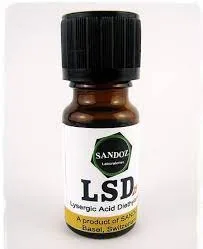
Albert Hofmann acid is an informal term referring to the history of LSD-25 and tribute blotter artwork honoring Swiss chemist Albert Hofmann. It is associated with the 1938 synthesis of lysergic acid diethylamide at Sandoz Laboratories, the landmark Bicycle Day self-experiment of April 19, 1943, and the continuing scientific study of psychedelics in neuroscience, psychiatry, and psychopharmacology.
Understanding this legacy requires engaging with rigorous pharmacology, institutional history, harm reduction science, and the evolving legal landscape surrounding psychedelic compounds. This article provides that foundation.
Key Facts: Albert Hofmann Acid at a Glance
| Field | Detail |
|---|---|
| Discovery year | 1938 |
| Scientist | Albert Hofmann |
| Institution | Sandoz Laboratories |
| Country | Switzerland |
| First intentional experience | April 19, 1943 |
| Primary receptor target | Serotonin 5-HT2A |
| Molecular formula | C₂₀H₂₅N₃O |
| Molecular weight | 323.43 g/mol |
| Validated analytical methods | GC-MS, LC-MS, HPLC |
| Current scheduling (US) | Schedule I, Controlled Substances Act |
What Is Albert Hofmann Acid?
Albert Hofmann acid refers collectively to the scientific history of LSD-25, the cultural tradition of tribute blotter artwork honoring its discoverer, and the enduring influence of Albert Hofmann’s work on neuroscience, psychiatry, and consciousness research. It does not designate a chemically distinct form of LSD — it is a term of historical and cultural reference, not pharmacological classification.
Albert Hofmann (1906–2008) was a Swiss chemist employed at Sandoz Laboratories in Basel, Switzerland, where he worked under the direction of Professor Arthur Stoll in the pharmaceutical-chemical research department. His primary focus was the systematic chemical investigation of ergot alkaloids — compounds derived from Claviceps purpurea, a fungus that parasitizes cereal grains and had long been recognized for its potent physiological effects.
In 1938, Hofmann synthesized lysergic acid diethylamide as the twenty-fifth compound in a series of lysergic acid derivatives, investigating the potential pharmacological utility of ergot-derived chemicals for circulatory and respiratory applications. LSD-25 was set aside after initial animal testing produced no results deemed significant at the time.
Hofmann’s contribution extends well beyond a single synthesis. His meticulous documentation, his willingness to self-experiment under controlled conditions, and his decades-long advocacy for rigorous scientific inquiry into psychedelic substances established him as one of the foundational figures in psychopharmacology and consciousness research. He lived to 102, remaining intellectually active until his death — a life as remarkable as the molecule he discovered.


Reviews
There are no reviews yet.