African Transkei Mushrooms: Origin, Morphology, and Mycological Significance
African Transkei mushrooms are a South African strain of Psilocybe cubensis associated with the Wild Coast region of the Eastern Cape. They are studied for their geographic origin, fungal morphology, biodiversity significance, and microscopic characteristics.
What Are African Transkei Mushrooms?
African Transkei mushrooms are a South African strain of Psilocybe cubensis associated with the Wild Coast region of the Eastern Cape. They are distinguished by their coastal grassland ecology, regionally specific morphology, and scientific value in fungal taxonomy, microscopy, and biodiversity research.
Key Facts: African Transkei Mushrooms
| Attribute | Value |
|---|---|
| Species | Psilocybe cubensis |
| Strain Designation | African Transkei |
| Family | Hymenogastraceae |
| Order | Agaricales |
| Region | Eastern Cape, South Africa |
| Habitat | Subtropical coastal grasslands |
| Spore Color | Deep purple-brown |
| Spore Shape | Ellipsoid to subellipsoid |
| Discovery Period | Early 2000s |
| Research Focus | Taxonomy, biodiversity, microscopy, ecology |
| Geographic Significance | Among few documented African P. cubensis strains |
African Transkei mushrooms are a strain of Psilocybe cubensis originating from South Africa’s historic Transkei region along the Wild Coast of the Eastern Cape. First documented in the early 2000s, this strain has earned sustained attention within mycological research communities for its environmental resilience, distinctive cap and stem morphology, and geographically rare provenance among named cubensis strains. Scientists examine African Transkei mushrooms to advance understanding of fungal biodiversity, regional taxonomy, ecological adaptation, and basidiospore morphology. Their association with warm subtropical coastal grasslands positions them as a compelling model for studying how environmental pressures shape phenotypic variation within a cosmopolitan fungal species. The African Transkei strain remains a substantive reference point in global discussions about Psilocybe cubensis distribution, fungal biogeography, and intraspecific geographic variation.
Scientific Classification
| Rank | Classification |
|---|---|
| Kingdom | Fungi |
| Phylum | Basidiomycota |
| Class | Agaricomycetes |
| Order | Agaricales |
| Family | Hymenogastraceae |
| Genus | Psilocybe |
| Species | Psilocybe cubensis |
| Strain | African Transkei |
| First Described | Franklin Sumner Earle, 1906 (Cuba) |
| Reclassification Basis | Molecular phylogenetics |
Introduction
Among the regionally documented strains of Psilocybe cubensis, African Transkei mushrooms occupy a distinctive position — not because they defy the taxonomy of their species, but because of where they were found and what that location reveals about fungal adaptation, biogeography, and the limits of current African mycological documentation.
Linked to the Wild Coast of South Africa’s Eastern Cape, the Transkei strain emerged from one of the continent’s most ecologically dynamic coastal zones. Its documentation in the early 2000s introduced mycologists and researchers to a Psilocybe cubensis variant shaped by subtropical humidity, Indian Ocean air currents, and the grassland ecosystems of a historically significant region.
This article examines African Transkei mushrooms through the lens of scientific inquiry — covering geographic origin, taxonomic classification, morphological characteristics, spore structure, ecological context, and relevance to ongoing fungal biodiversity and biogeography research. For researchers, taxonomists, and mycology students, the Transkei strain offers a focused case study in how geography and environment interact with fungal biology at the strain level.
Geographic Origin and Historical Context
The Transkei Region: Ecological and Cultural Significance
The Transkei region occupies the Eastern Cape coastline of South Africa, bordered by the Great Kei River to the south and the KwaZulu-Natal border to the north. Historically administered as a separate homeland under apartheid-era governance, the region was reintegrated into South Africa following the political transition of 1994. Today, this stretch of coastline is recognized internationally as the Wild Coast — a designation reflecting its rugged terrain, biodiversity-rich ecosystems, and relative ecological preservation compared to more urbanized South African coastal zones.
The Wild Coast receives consistent rainfall from warm Indian Ocean weather systems, sustaining subtropical grassland communities that support a wide range of fungal species. It is within this environment that African Transkei mushrooms were first documented.
First Documentation and Biogeographic Significance
The Transkei strain was reportedly collected and identified in the early 2000s, making African Transkei mushrooms one of the few Psilocybe cubensis strains with confirmed Southern African provenance. Their geographic origin distinguishes them from better-documented strains associated with Central America, Southeast Asia, and the Gulf Coast of North America — regions where Psilocybe cubensis carries a substantially longer recorded research history.
The documentation of African Transkei mushrooms expanded the known biogeographic range of the species and provided researchers with a Southern African population through which to examine how regional ecology influences morphological and reproductive characteristics within Psilocybe cubensis. In fungal biogeography — the study of how fungal species and populations are distributed across geographic space — strain-level documentation from under-represented regions carries disproportionate scientific value. African Transkei mushrooms represent precisely this category of discovery.
Taxonomic Classification
Formal Taxonomy and Phylogenetic Placement
Psilocybe cubensis was first formally described by Franklin Sumner Earle in 1906 from Cuban specimens. Subsequent molecular phylogenetic analysis — the comparison of DNA sequence data across fungal lineages — repositioned the species from the previously assigned family Strophariaceae into Hymenogastraceae, a family characterized by dark-spored lamellae and basidiocarps with partially enclosed developmental stages. African Transkei mushrooms maintain the defining taxonomic characteristics of P. cubensis while exhibiting regionally distinct morphological expression shaped by the Wild Coast environment.
Strain vs. Species: A Critical Distinction
In mycological terminology, a strain refers to a genetically or phenotypically distinguishable population within a single species. Strains are not taxonomically recognized at the species level and do not receive formal binomial nomenclature. The designation “African Transkei” functions as a geographic and phenotypic identifier — a convention used in mycological communities to track, study, and compare regionally distinct populations of Psilocybe cubensis without implying speciation.
This distinction matters for researchers approaching the subject taxonomically. African Transkei mushrooms are Psilocybe cubensis; the strain designation records where they were found and what distinguishes their phenotypic expression — it does not constitute a separate taxonomic entity under current fungal classification standards.
Morphological Characteristics
How Are African Transkei Mushrooms Identified?
Researchers identify African Transkei mushrooms through a combination of macroscopic characteristics, microscopic spore morphology, geographic provenance, and taxonomic analysis. The key identification markers across pileus, stipe, lamellae, and spore print are detailed below.
Pileus (Cap)
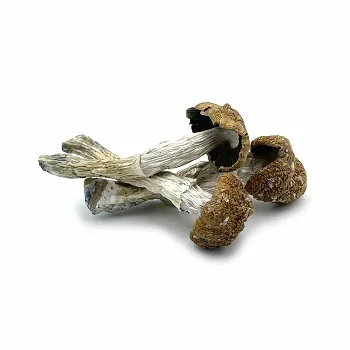
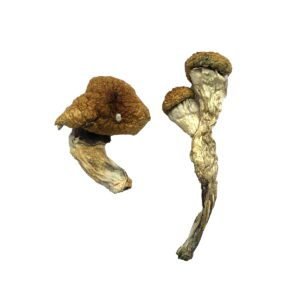
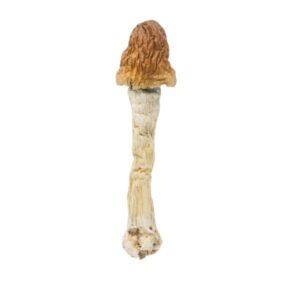
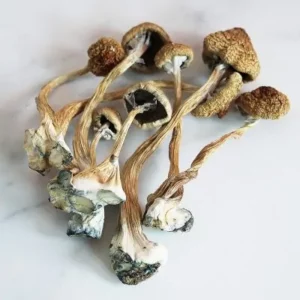
Mature African Transkei mushrooms characteristically produce caps in the caramel, golden-brown, or creamy-brown color range, with darker pigmentation concentrated at the center — the umbo — fading toward the cap margin. This graduated coloration pattern reflects both genetic expression and the influence of local environmental conditions, including light intensity, humidity, and substrate composition.
The pileus surface is smooth under humid conditions and may develop a slightly viscid texture when moist. As specimens mature, the cap transitions from a convex to broadly umbonate profile, eventually flattening in older fruiting bodies. Bruising behavior — a diagnostic characteristic shared across P. cubensis — produces blue-green discoloration at sites of physical damage, resulting from enzymatic oxidation of specific indole compounds present in the tissue.
Stipe (Stem)
The stipe of African Transkei mushrooms is typically firm, pale to off-white, and fibrous in texture. A persistent partial veil remnant — the annulus — is present in younger specimens and degrades progressively with age. The stipe base may exhibit slight thickening. Bruising consistent with that observed on the pileus occurs on stem tissue when mechanically damaged, providing a secondary confirmation of species identity in field settings.
Lamellae (Gills)
The gills of mature specimens are closely spaced, adnate to adnexed in their attachment to the stipe, and progress in color from pale gray in immature specimens to deep purple-brown at full spore maturity. This darkening pattern, driven by basidiospore deposition along gill surfaces, is taxonomically characteristic of the genus Psilocybe and provides a reliable visual maturity indicator for both field identification and laboratory harvest timing.
Spore Print
The spore print of African Transkei mushrooms produces the deep purple-brown to near-black coloration that is a defining characteristic of Psilocybe cubensis as a species. Obtaining a clean spore print — by resting a mature cap, gill-side down, on paper in a still environment for several hours — remains a foundational technique in field identification, voucher specimen preparation, and laboratory microscopy.
Microscopy Characteristics of African Transkei Mushrooms
Basidiospore Structure
Under light microscopy, African Transkei mushroom basidiospores display the morphological features consistent with Psilocybe cubensis at the species level, while providing strain-level reference data for comparative population studies. Key microscopic characteristics include:
| Characteristic | Description |
|---|---|
| Shape | Ellipsoid to subellipsoid |
| Wall | Thick, smooth |
| Color (mass) | Dark purple-brown |
| Color (individual) | Golden to amber under transmitted light |
| Germ pore | Prominent, apical, clearly visible |
| Approximate size | 11–17 × 7–10 μm |
The germ pore — a thin-walled region at the spore apex through which the germination tube emerges — is a defining structural feature of Psilocybe basidiospores and a primary identification marker in microscopic taxonomy. Its consistent presence and prominence in African Transkei mushroom spores aligns with species-level descriptions of P. cubensis and supports accurate strain identification under laboratory conditions.
Basidia and Cheilocystidia
In sectioned gill tissue prepared for microscopy, basidia — the spore-bearing cells — appear as club-shaped structures typically bearing four sterigmata, each supporting a single basidiospore. Cheilocystidia, the sterile cells located along gill edges, exhibit the fusiform to lageniform (flask-shaped) morphology characteristic of Psilocybe species. Accurate characterization of these cellular structures requires properly mounted gill sections and trained microscopic interpretation, but they represent critical data points in both strain-level and species-level fungal identification.
Microscopy Applications in Transkei Research
African Transkei mushroom microscopy serves multiple research functions: it supports strain-level documentation for mycological archives and herbarium collections, provides comparative morphological data for fungal biodiversity studies, and enables researchers to establish baseline spore measurements for a Southern African P. cubensis population.
Because geographic isolation can produce measurable variation in spore dimensions and surface characteristics over generational time — a process studied through population genetics and phenotypic plasticity research — systematic microscopic documentation of strains like African Transkei mushrooms contributes meaningfully to understanding intraspecific variation in Psilocybe cubensis at the global scale. These spore records also serve as voucher specimen data, anchoring geographic and morphological claims to verifiable physical evidence.
Ecological Context and Environmental Adaptation
Wild Coast Ecosystem
The subtropical coastal grasslands of South Africa’s Wild Coast provide the ecological framework within which African Transkei mushrooms were documented. This biome is characterized by:
- High annual rainfall concentrated in summer months, driven by Indian Ocean weather systems
- Warm temperatures moderated by coastal proximity
- Soils enriched by decomposing organic matter and mammalian herbivore activity
- Grassland and transitional bush communities with limited intensive agricultural disturbance
- High overall biodiversity, including significant fungal diversity that remains systematically under-documented
Psilocybe cubensis is a coprophilous and saprotrophic decomposer — its mycelium colonizes nutrient-rich substrates, particularly the dung of large herbivores and decomposing plant material in grassland settings. The Wild Coast’s cattle-grazing traditions, combined with its climate and soil profile, establish the substrate and microclimatic conditions necessary to support P. cubensis fruiting on a seasonal basis.
Adaptation and Phenotypic Expression
Fungal strains isolated from geographically distinct environments frequently exhibit phenotypic differences that reflect localized adaptation. While African Transkei mushrooms remain Psilocybe cubensis at the species level, their morphological expression — including coloration, stipe density, and fruiting body architecture — likely reflects selective pressures specific to the Wild Coast environment: humidity fluctuation, UV radiation intensity, seasonal temperature cycling, and regional substrate composition.
Phenotypic plasticity — the capacity of a single genotype to produce different physical expressions in response to environmental variation — is well-documented in fungal biology. African Transkei mushrooms represent a field-documented example of this principle within a globally distributed species, making them a legitimate and productive subject for comparative ecology studies examining how cosmopolitan fungi adapt to regionally distinct conditions.
Why Researchers Study African Transkei Mushrooms
African Transkei mushrooms are scientifically important because they represent a geographically documented South African strain of Psilocybe cubensis that contributes valuable data to fungal biodiversity, taxonomy, ecological adaptation research, and the expanding field of fungal biogeography.
Four primary research rationales drive scientific interest in this strain:
1. Biodiversity Documentation
The African Transkei strain contributes to the systematic mapping of Psilocybe cubensis distribution across the African continent — a region where fungal biodiversity remains significantly under-documented relative to its actual diversity. Formal strain-level documentation supports fungal biodiversity databases, provides geographic data points for species distribution modeling, and establishes voucher specimen references for future comparative research.
2. Taxonomy and Intraspecific Variation
The study of named strains within Psilocybe cubensis raises legitimate taxonomic questions: At what point does geographic isolation and morphological divergence warrant reclassification? How do researchers distinguish environmentally induced phenotypic variation from genetically fixed strain differences? African Transkei mushrooms sit at the center of these questions — phenotypically distinct enough to be documented as a named strain, yet taxonomically continuous with P. cubensis as currently circumscribed through molecular phylogenetics.
3. Fungal Biogeography
African Transkei mushrooms provide a Southern African data point in the global biogeographic analysis of Psilocybe cubensis — a species whose distribution patterns, dispersal mechanisms, and regional population differentiation remain active areas of research. Each geographically documented strain contributes to the species distribution models used to understand how P. cubensis achieved its current global range.
4. Microscopy and Reference Collections
The spore morphology and gill anatomy of African Transkei mushrooms make them a useful reference specimen for mycology training programs, university herbarium collections, and citizen science microscopy projects. Standardized spore measurement data from this strain can be incorporated into comparative databases tracking intraspecific variation across geographically separated P. cubensis populations — data with direct application in both academic taxonomy and forensic mycology contexts.
African Transkei Mushrooms in South African Biodiversity Research
Where do African Transkei mushrooms originate?
African Transkei mushrooms originate from South Africa’s Wild Coast region in the Eastern Cape — an area characterized by subtropical grasslands, high overall biodiversity, and strong Indian Ocean climatic influence. Their documented origin from this region makes them one of the few named Psilocybe cubensis strains with confirmed provenance from the African continent.
Africa represents one of the most significant gaps in global fungal biodiversity documentation. Estimates suggest that the continent’s actual fungal diversity substantially exceeds its formally documented species and strain records — a disparity driven by historical under-investment in field mycology, limited herbarium infrastructure relative to species density, and restricted access to molecular phylogenetic analysis tools in many regional research contexts.
Within this broader context, African Transkei mushrooms carry scientific significance that extends beyond their individual morphological characteristics. Their documentation establishes a verifiable record of Psilocybe cubensis presence in the Eastern Cape, contributes a Southern African data point to global species distribution models, and demonstrates that the Wild Coast’s subtropical grassland ecosystem supports the ecological conditions necessary for P. cubensis fruiting.
Expanded systematic fungal surveys along the Wild Coast and broader Eastern Cape region — building on the foundational documentation of African Transkei mushrooms — would likely yield additional strain-level and potentially species-level discoveries. The African Transkei strain is therefore best understood not as an isolated finding, but as an entry point into a substantially larger and incompletely documented African mycological record.
FAQ: African Transkei Mushrooms
What is the African Transkei mushroom?
The African Transkei mushroom is a regionally documented strain of Psilocybe cubensis associated with the Wild Coast of South Africa’s Eastern Cape. It is studied for its geographic rarity among named cubensis strains, its morphological characteristics, ecological associations with subtropical coastal grasslands, and contribution to African fungal biodiversity documentation.
Where was the Transkei strain discovered?
The strain was reportedly collected and documented in the Transkei region of South Africa’s Eastern Cape in the early 2000s — placing African Transkei mushrooms among the few Psilocybe cubensis strains with confirmed provenance from the African continent.
What makes the African Transkei strain unique?
Its Southern African origin, ecological association with Wild Coast subtropical grasslands, and regionally distinct morphological expression distinguish African Transkei mushrooms from better-documented Psilocybe cubensis strains originating in Central America, Southeast Asia, and North America. Their documentation also contributes to the under-represented field of African fungal biogeography.
What color is the African Transkei mushroom cap?
Mature specimens characteristically produce caramel, golden-brown, or creamy-brown caps with darker central pigmentation that gradually fades toward the margin — a coloration pattern reflecting both genetic expression and local environmental conditions including humidity and substrate composition.
What do Transkei spores look like under a microscope?
African Transkei mushroom basidiospores are ellipsoid to subellipsoid, thick-walled, and smooth-surfaced, appearing dark purple-brown in mass and golden to amber individually under transmitted light. A prominent apical germ pore is a defining structural feature visible under properly calibrated light microscopy.
What ecosystem is associated with the Transkei strain?
African Transkei mushrooms are ecologically associated with subtropical coastal grasslands along South Africa’s Wild Coast — a biome characterized by high seasonal rainfall, Indian Ocean climatic influence, nutrient-rich soils produced by herbivore activity, and high overall biodiversity.
Why is the Transkei strain important in mycology?
African Transkei mushrooms advance scientific understanding of fungal biodiversity in an under-documented geographic region, provide comparative morphological and ecological data for Psilocybe cubensis distribution and biogeography research, contribute voucher specimen records to mycological archives, and raise productive taxonomic questions about intraspecific variation and phenotypic adaptation within cosmopolitan fungal species.
What family does Psilocybe cubensis belong to?
Psilocybe cubensis belongs to the family Hymenogastraceae within the order Agaricales — a classification established through molecular phylogenetic analysis that repositioned the genus from the previously assigned family Strophariaceae based on DNA sequence comparison across fungal lineages.
Conclusion
African Transkei mushrooms are more than a geographically named strain — they are a documented example of how Psilocybe cubensis, a broadly distributed fungal species, expresses regional specificity through morphology, ecology, and environmental adaptation. Their Wild Coast origin, early 2000s documentation, and distinctive biological characteristics position them as a meaningful subject within fungal taxonomy, biodiversity research, fungal biogeography, and microscopic analysis.
For mycologists, African Transkei mushrooms represent an argument for expanded African fungal documentation — a continent whose mycological diversity remains systematically under-studied relative to its actual breadth. For taxonomists, they raise substantive questions about how intraspecific variation is measured, recorded, and interpreted within cosmopolitan species like P. cubensis using molecular phylogenetics and population genetics. For researchers working at the intersection of ecology and fungal biology, they demonstrate that geographic isolation, even within a single species, produces scientifically meaningful phenotypic and ecological differences worth documenting through field collection, voucher specimen preservation, and herbarium archiving.
The scientific value of African Transkei mushrooms lies precisely in their specificity: a strain defined by place, shaped by environment, and capable of informing research questions — in biogeography, taxonomy, biodiversity, and ecological adaptation — that extend well beyond their subtropical coastal grassland origin.
Reviews
There are no reviews yet.